Selling through Kaufland alongside your existing channels
For most sellers Kaufland isn't a replacement for their existing channel but a third one, with a different customer profile and nine markets behind a single registration. It pays off when your margin survives commission and shipping, and when your stock can supply an extra channel without starving the first.
What you're adding
Not a second domestic channel, but access to nine European markets on one registration and one monthly fee. That makes this an internationalisation decision with a low barrier to entry, rather than simply another marketplace.
The channel trade-off
Own webshop | Your current marketplace | Kaufland | |
|---|---|---|---|
Customer relationship | Yours | Limited | Limited |
Reach | What you buy | Your home market | Nine countries |
Competitive density | Not applicable | Often high | Often lower |
Barrier to entry | Buying traffic | Familiar ground | Subscription and product data |
Best role | Margin and customer base | Domestic volume | Volume and European scale |
You don't add Kaufland because it's bigger than your current channel. You add it because competition in your category is often shallower there — and because one registration opens nine markets.
Five checks before you start
Margin. Enough left after purchasing, commission and shipping. Work it through with Kaufland seller fees.
Stock. You can supply an extra channel without draining the existing one.
Volume. The subscription is a fixed cost. At ten sales a month it's your largest cost per product.
Content. Product data and, per market, language versions.
Focus. Your current channel should be running properly. A second channel doesn't repair the first.
The hidden cost of multichannel
Fees aren't what make multichannel expensive; fragmentation is. Three dashboards, three cost structures, three stock positions. You end up steering on revenue per channel instead of margin per product, discovering too late that a product is profitable on one channel and loss-making on another, and making stock decisions reactively.
Kaufland adds one layer: commission differs by market. The same product at the same price yields a different margin in Poland than in Germany.
How Rylee keeps it manageable
One shop analytics overview with orders, sales and stock across Kaufland, Amazon, bol, Shopify and WooCommerce.
Contribution margin per product and a consolidated P&L, so you see per product which channel and which market genuinely contribute.
AI Advisor to ask in plain language where margin leaks and what changed.
MCP connection to use that same data in your own AI environment.
Scheduled reports and exports, multi-seat with permissions, EU hosting.
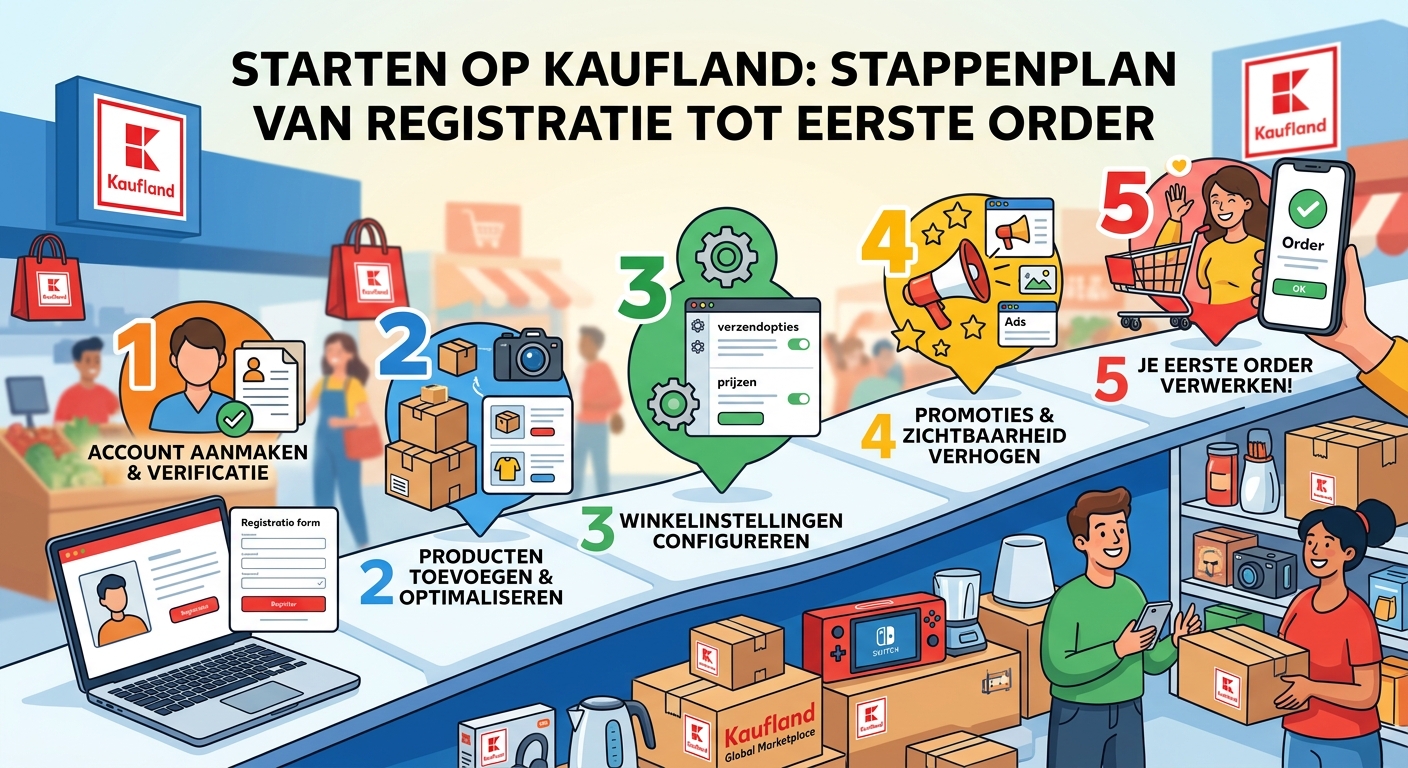
Ready to begin? See how to start selling on Kaufland.
Frequently asked questions
Can I sell the same products on several marketplaces? Yes. Watch stock allocation, and note that margin differs per channel and per market.
Do I pay a subscription per market? No, the monthly fee covers all nine markets together.
Is Kaufland less competitive than larger marketplaces? In many categories competitive density is lower, but it varies by category and market. Test it in your own category.