Amazon fulfilment options: choose per product, not per business
Fulfilment on Amazon means choosing between Fulfilment by Amazon (Amazon stores and ships), Fulfilment by Merchant (you ship yourself) or a combination per product. The decision rests on four variables: contribution margin per unit, weight and dimensions, turnover speed and return rate. Most mature sellers run a mix rather than a single model.
The three models
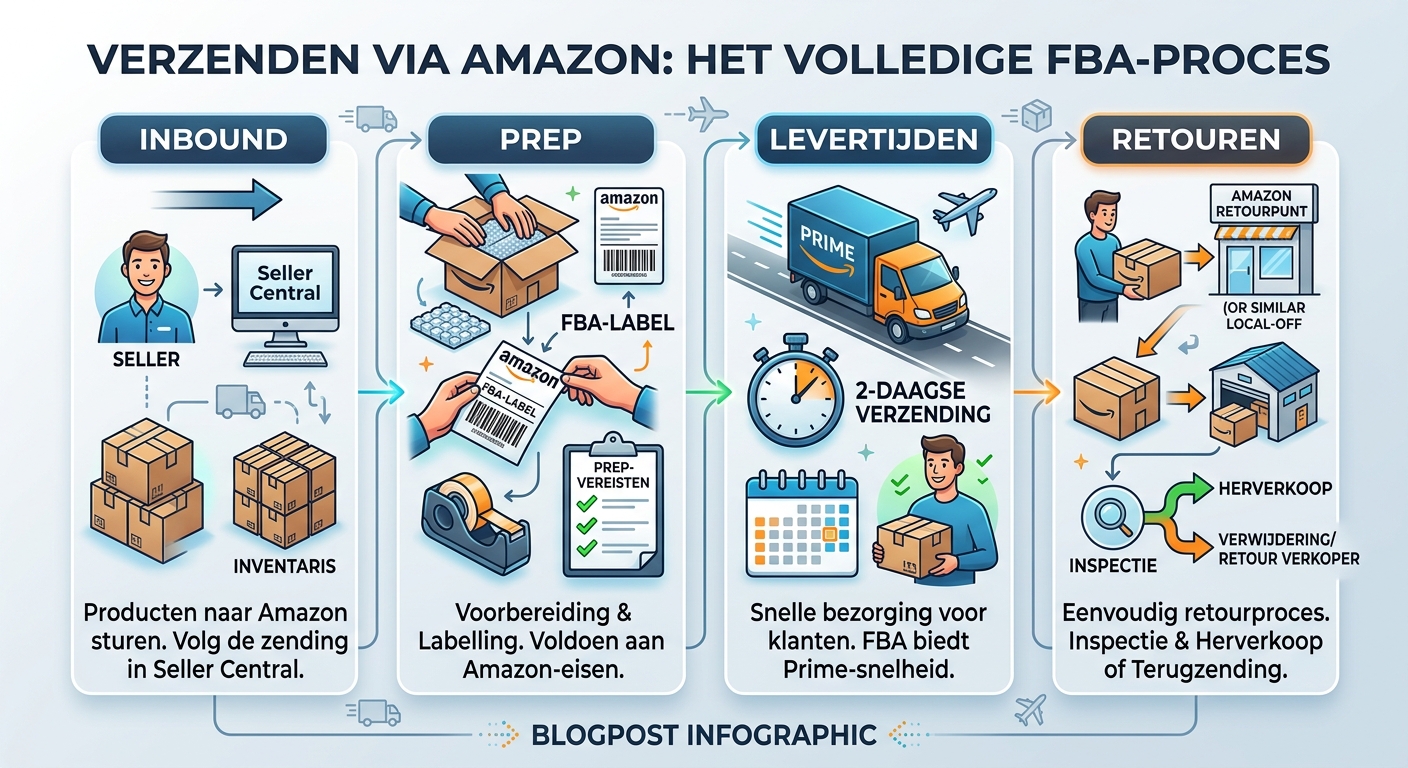
FBA. You send stock to an Amazon fulfilment centre. Amazon picks, ships and handles returns and customer service. You get Prime delivery, which measurably lifts conversion and visibility. You pay per unit plus storage, and your stock is physically committed. Full detail in Amazon FBA.
FBM. You hold and ship stock yourself or through your own 3PL. Full control, no Amazon storage fees, but you must hit delivery and cancellation standards and handle customer service.
A mix. Fast movers and compact products through FBA; slow movers, oversized and fragile items through FBM. Once you have more than a handful of products this is almost always the financially better answer.
The decision model: score each product
Criterion | Point for FBA | Point for FBM |
|---|---|---|
Under 1 kg | ✓ | |
Standard size | ✓ | |
Sells more than 30 units a month | ✓ | |
Sale price above €20 | ✓ | |
Return rate above 15% | ✓ | |
Fragile or special packaging | ✓ | |
Strongly seasonal | ✓ | |
Stock more than 90 days in transit | ✓ | |
High value, low turnover | ✓ | |
Bundles or personalised | ✓ |
Five or more points for FBA: go FBA. Otherwise FBM, or FBA for your fast-moving variants and FBM for the rest.
The variable everyone underestimates: turnover speed
Amazon charges storage per cubic metre per month, with higher rates in the fourth quarter and escalating costs for stock that sits. A product selling 40 units a month with 200 units of stock is fine. The same product with 800 units turns your fulfilment advantage into a storage bill.
Rule of thumb: hold roughly 30 to 60 days of stock in the fulfilment centre. Keep the rest with yourself or your 3PL.
The hidden downsides of FBA
Stock you can't see. You lose physical visibility. Without good reporting you learn too late that a product has stalled.
Returns restocked as new. Convenient, but you have limited sight of condition.
Exit costs money. Removing or disposing of stock is a cost you didn't budget.
Margin per product shifts. Fulfilment fees scale with weight and size, not with your sale price. That's precisely where cheap, heavy products die. Work it through with the full fee breakdown.
How Rylee underpins the decision
FBA versus FBM is a margin calculation per product, which makes it a data question.
Contribution margin per product with your real costs, so you can see which products can carry fulfilment fees and which can't.
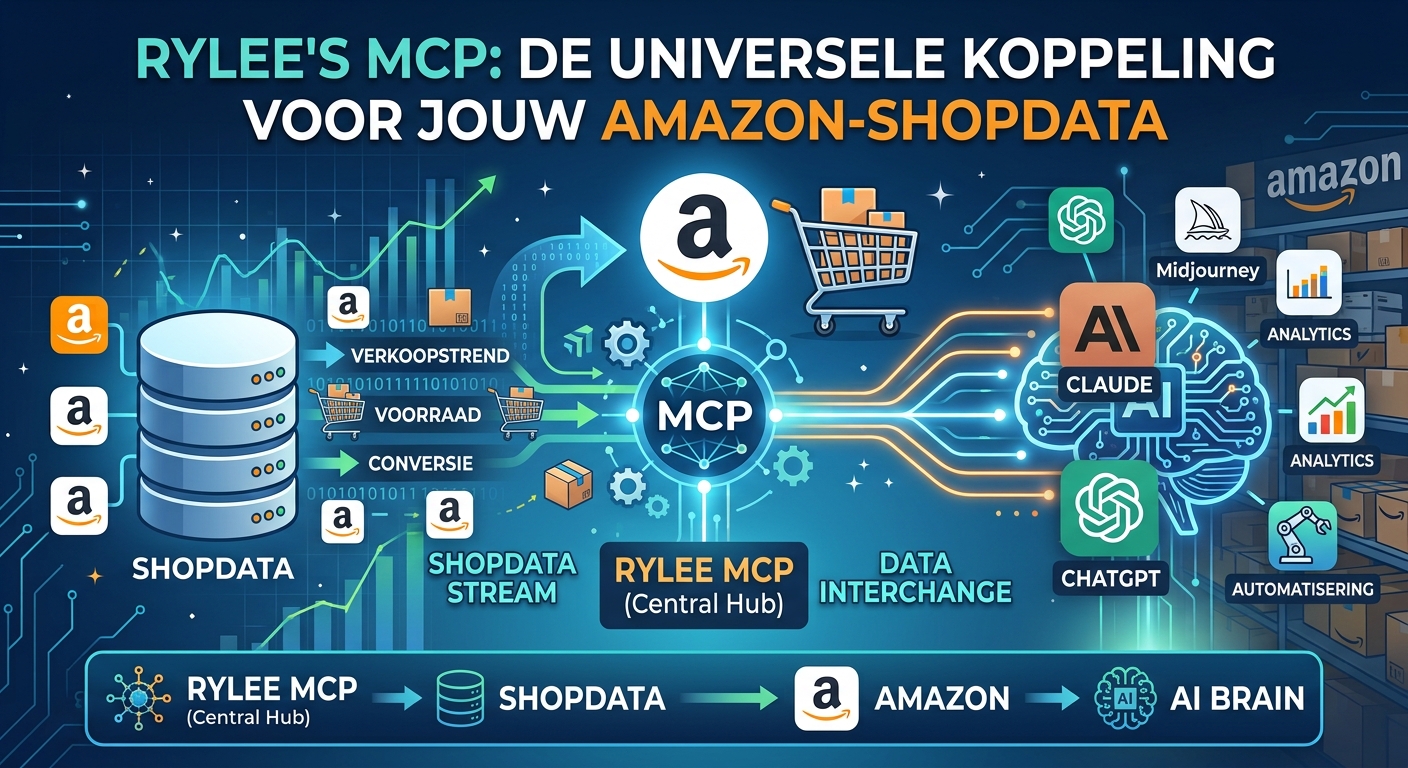
Orders, sales and stock across Amazon (all European marketplaces), bol, Kaufland, Shopify and WooCommerce in one shop analytics overview — including the turnover picture you need to decide how much stock goes where.
Consolidated P&L and scheduled reports, making the quarterly reassessment routine.
AI Advisor. Ask in plain language which products move slower than expected or where cost per unit sold is rising.
Amazon Legends and Ecom Legends for hands-on experience with inbound, prep and return flows.
Try Rylee free for 14 days and decide per product on numbers.
Frequently asked questions
Is FBA always better than shipping yourself? No. For light, fast-selling products usually yes. For heavy, fragile, slow-moving or heavily returned products, often not.
Can I use FBA and FBM at the same time? Yes, within the same account and even the same ASIN. For most sellers that's the optimal setup.
Can I get Prime without FBA? Only through Seller Fulfilled Prime, which carries strict performance requirements. For most starters that isn't realistic.
What happens to stock that doesn't sell? It gets more expensive the longer it sits. You can have it returned or disposed of, both at a cost. Preventing is cheaper than solving.