Amazon repricer: needed or not?
An Amazon repricer adjusts your selling price automatically, based on rules or competitor prices, aiming to win the Buy Box at the highest price possible. It matters mainly to sellers who resell other brands and therefore share a product page. If you sell only your own brand, you hold that page alone — and pricing becomes a margin and stock question rather than a contest.
What it does, mechanically
A repricer watches the offers on a shared product page and moves your price within limits you set. Good implementations move up as well as down; poor ones only ever race to the bottom.
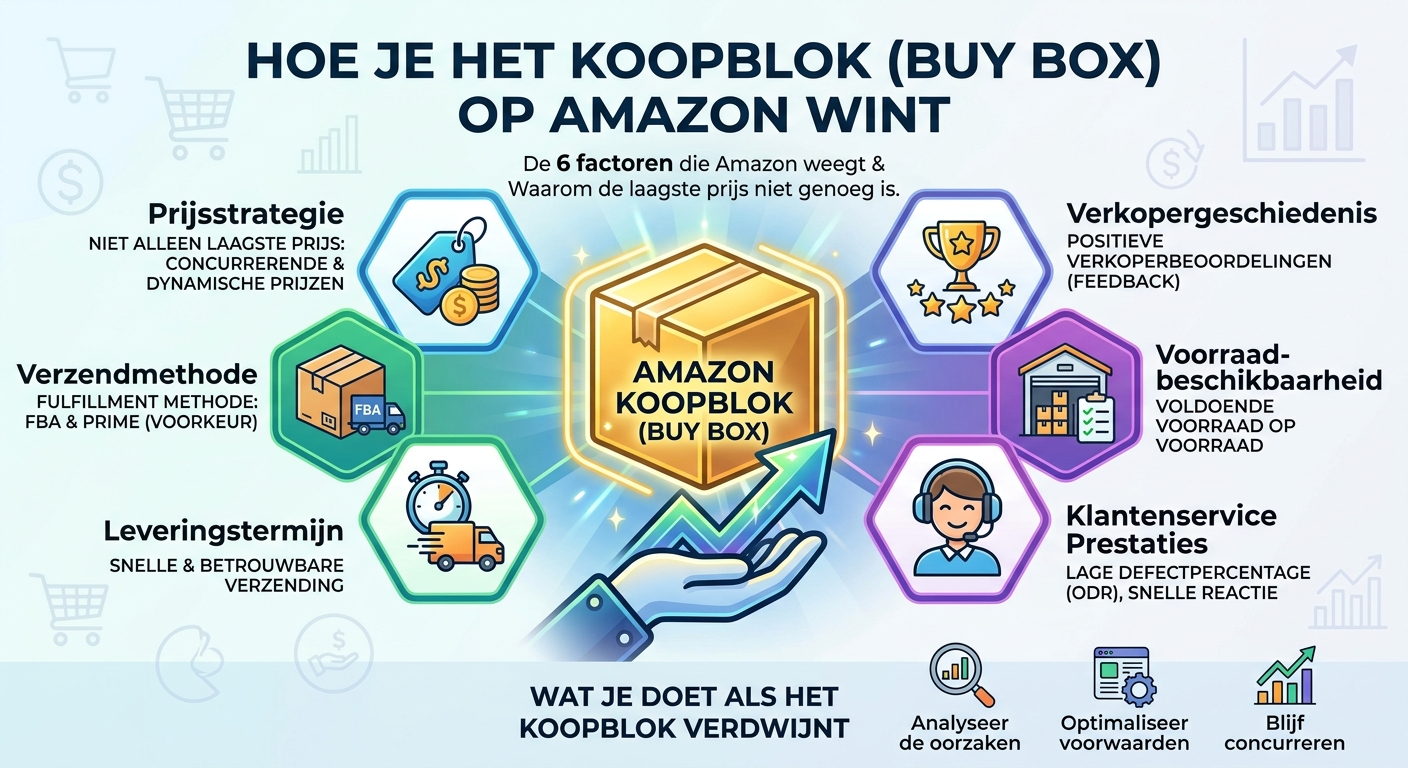
Winning the panel isn't purely about price, though. Delivery method, delivery time, seller performance and stock all weigh in — see the six factors in the Amazon Buy Box. Which is why a repricer alone never fixes a Buy Box problem caused by late shipments.
When automation earns its place
Relevant when:
You resell other brands and share pages.
Your range is too large to manage by hand.
Competitors move prices several times a day.
Your margin is thin and every percentage point counts.
Barely relevant when:
You sell only your own brand on your own ASINs.
You have a handful of products with stable prices.
Your differentiation is bundling, service or brand rather than price.
For own-brand sellers, pricing is a different question
Around 70% of the sellers we speak to run their own brand. For them price isn't about reclaiming a panel but about three other things:
Margin versus volume. What actually happens to total contribution margin if you go from €29.95 to €27.95? Usually less volume than hoped, and always an immediate margin hit.
Price and stock together. If stock runs out before your next delivery lands, a price cut is the worst possible move. Going out of stock costs position, and regaining it costs more than the discount earned.
Price and advertising cost. A lower price lifts conversion and therefore lowers ACOS — while shrinking contribution margin. Whether that nets out is only calculable if you know your margin per product.
Four expensive mistakes
Repricing below break-even. Without a correct floor per product you automate losses.
Basing the floor on purchase price alone. Referral fee, fulfilment and returns belong in it — see Amazon seller fees.
Only ever moving down. When competitors go out of stock, your price can rise. Structurally forgotten.
Decoupling price from stock. Cutting price on a product with three weeks of cover pulls forward revenue you then can't deliver.
How Rylee underpins pricing decisions
Every pricing decision is ultimately a margin calculation. Rylee supplies the numbers you make it on.
Costs, margins and contribution margin per product with your real purchase and cost lines, so you know your true floor per product before you move.
Consolidated P&L across Amazon (all European marketplaces), bol, Kaufland, Shopify and WooCommerce — the same product yields a different margin per channel at the same price.
Orders, sales and stock in one shop analytics overview, so price and stock decisions aren't taken in isolation.
AI Advisor to ask what happened to margin after a price change and which products are losing it.
Scheduled reports and exports for a fixed margin check each period.
Amazon Legends and Ecom Legends to work through pricing approaches with other sellers.
Try Rylee free for 14 days and know your floor per product.
Frequently asked questions
Do I need a repricer if I sell my own brand? Usually not for the Buy Box, since you share the page with nobody. Your pricing question is margin, stock and advertising cost.
Does the lowest price win the Buy Box? No. Delivery method, delivery time, performance and stock all count. An FBA offer regularly wins at a higher price.
What's a safe floor? Purchase price plus referral fee plus fulfilment plus a reserve for returns, plus the margin you insist on keeping. Below that you're selling at a loss.
Can automated pricing damage my brand? It can. Visible, constant price movement trains customers to wait, and undercuts your own other sales channels.